Great Salt Plains
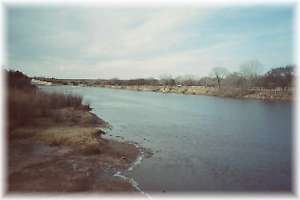
In 1811, Sans Orelle, an Osage Indian, with others of his tribe, guided Major George C. Sibley, Indian Agent from Fort Osage, Missouri, and his party to Salt Plains. They are thought to have been the first white men to see the Plains, which Major Sibley called the Grand Saline. The Salt Fork of the Arkansas River, flowing around the plain, was known to the Osages as Nescatunga (big salt water). Another early day explorer to see the Plains was Capt. Nathan Boone, who headed a Government expedition from Fort Gibson into what is now central Kansas in 1843.
The Great Salt Plains have been the scene of many Indian Councils, both of war and peace. In drafting the treaty which defined the territory to become the so-called permanent home of the Cherokees in 1828, the United States Government withheld the Salt Plains area with the provision that, “The right is reserved to the United States to allow other tribes of red men to get salt on the Great Salt Plains in common with the Cherokee Tribe.” The value of the Plains lay not in its salt alone, but in the rich hunting afforded by the animals migrating there for the salt supply, and possession of this area is said to have been the cause of may Indian battles. In the earliest of the settlement of the Indian Territory, Western Kansas and Texas cattlemen sent wagons to the Plains to haul away great loads of salt.
Today the Great Salt Plains is a National Wildlife Refuge and a State Park available to the public for outdoor sport and ecological study and observation.
Getting There & Details
- Map
- Get Directions →
More Things to Do
Alfalfa County Courthouse and War Memorial
The Alfalfa County Courthouse was built in 1921 and featured on its north lawn is…
Learn more →Alfalfa County Museum
The Alfalfa County Museum occupies the 1929 National Historic Cherokee Hotel, that to this day…
Learn more →Byron Hatchery and Watchable Wildlife Area
In 1929, the Oklahoma Department of Wildlife Conservation established Byron State Fish Hatchery to produce…
Learn more →Artesian Well
An ever-flowing "Artesian well" spring is located northeast of Cherokee, Oklahoma, and provides a cool…
Learn more →